


Dream Jungle Coming to SFAC Main Gallery
SFAC presents a group exhibition featuring six local artists subverting colonial narratives of the tropics, opening January 29, 2026
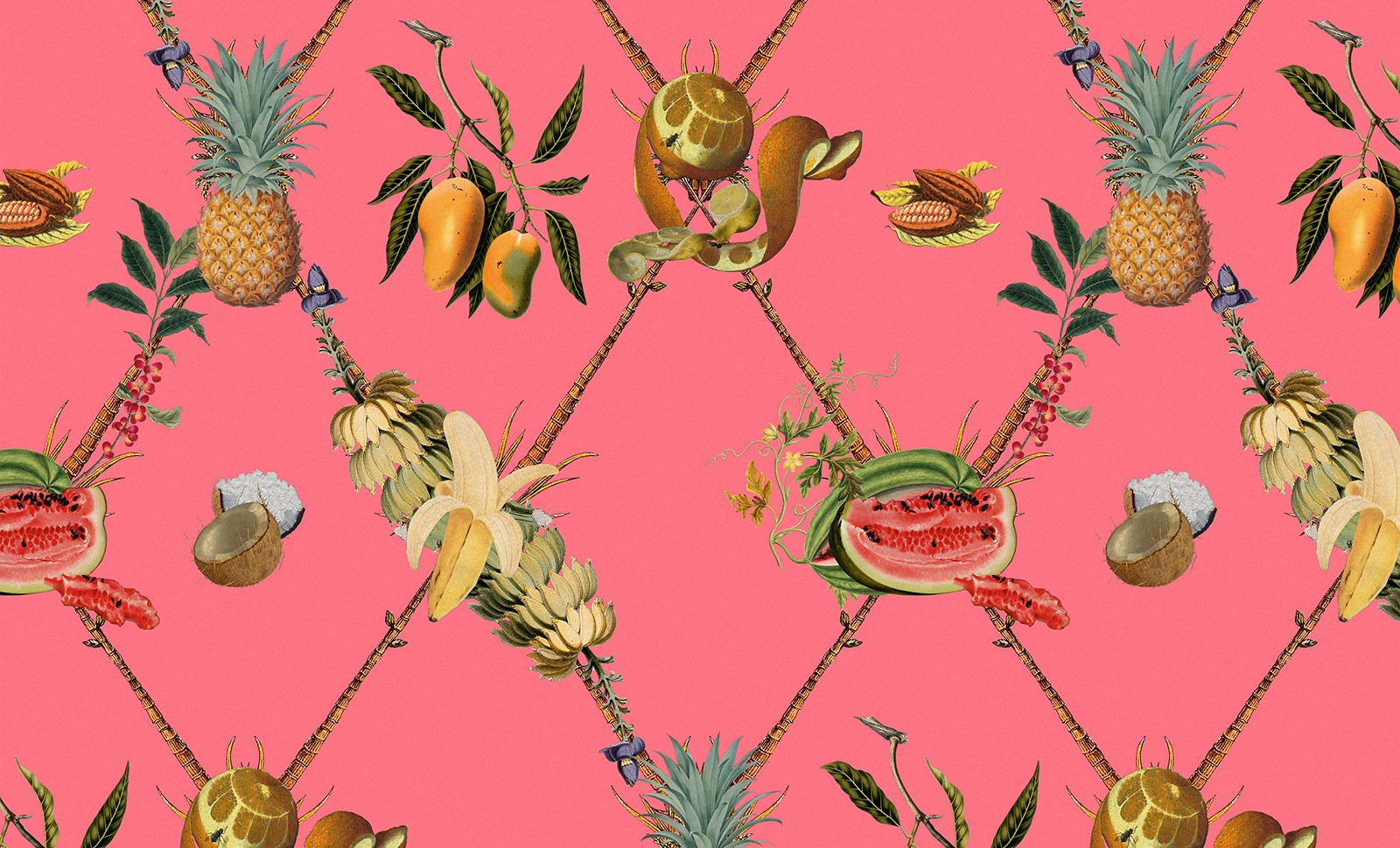
Image: Astria Suparak, Welcome to the Taro Dome, 2026 (detail). Fabric banners, photography backdrop supports. Courtesy of the Artist.
SAN FRANCISCO, January 9, 2026 — The San Francisco Arts Commission (SFAC) Main Gallery is excited to present Dream Jungle, an exhibition in dialogue with the novel by Jessica Hagedorn. This group exhibition curated by Matthew Villar Miranda, features new commissions and key loans by Alexa Burrell a.k.a. LEXAGON, adrian clutario, Al-An deSouza, Astria Suparak, and Carlos Villa, along with archival holdings from The Center for the Study of the Study of the Tasaday and the Jessica Hagedorn Papers at The Bancroft Library. Together the exhibition features artists who wield elements of performance to explore counter-ethnographies of the tropics, subverting colonial notions of the other.
Dream Jungle opens on January 29, 2026 at the SFAC Main Gallery in the War Memorial Veterans Building and will be on view through May 2, 2026.
“The San Francisco Arts Commission is proud to present Dream Jungle as a bold example of how different artists can foster a collective dialogue around identity, representation, and power and challenge preexisting colonial narratives,” said Ralph Remington, Director of Cultural Affairs. “We are thrilled to work with this extraordinary group of artists, The Center for the Study of the Study of the Tasaday, and the Bancroft Library, to make this thought-provoking exhibition possible.”
Taking its title from Jessica Hagedorn’s 2003 novel, the exhibition explores the tangle of truth and artifice behind imperial representation. In the novel, Hagedorn stages two performances in the Philippine jungle: the media spectacle of a fabricated “Stone Age” tribe and the filming of a Hollywood Vietnam War epic. Drawing from this framework, Dream Jungle foregrounds the tropics as a zone of psychic and historical projection—where the colonized land and body are scripted, cast, and costumed for imperial consumption.
Through installation, video, literature, and archival assemblage, the artists enact what Miranda calls “tropical counter-ethnographies": practices that seize the tropes of scripting, scoring, costuming, drag, fabrication, fore- and backgrounding, character building, scene-setting, and tableau to unsettle colonial modes of capture. Each artist stages a different facet of the (de)construction of performance:
ARCHIVE – Grounding the exhibition are selections from the Jessica Hagedorn Papers, housed at The Bancroft Library at the University of California, Berkeley. These materials span from 1974 to 2006 and include drafts of Hagedorn’s novels and plays, public relations materials, notes, and correspondence. Hagedorn—widely respected as a postcolonial author—explores power and identity in Philippine society and among Filipinx American immigrants, merging poetry, fiction, music, and performance art to interrogate the cultural afterlives of imperialism. These archives underscore the literary and historical layers that shape Dream Jungle’s curatorial frame.
This section also includes selections from The Center for the Study for the Study of the Tasaday, a vast and growing meta-archive founded by artist Stephanie Syjuco. The project catalogs scholarly documentation, media coverage, and visual materials surrounding the Tasaday—the so-called “Stone Age” tribe “discovered” in the Philippines in 1971—and the controversies that followed. The Center complicates the act of archiving itself and questions who gets to narrate history.
NARRATIVE – Al-An deSouza’s decades-long career across academia, fiction, and multimedia art with works that parody colonial depictions of the tropics, such as Joseph Conrad’s novel Heart of Darkness (1899) and primitivizing paintings by European modernists Paul Gauguin and Henri Rousseau. Their photographic abstractions and text-based works translate these tropes into critiques of representation. deSouza's 2020 book Ark of Martyrs rewrites Conrad’s book, drawing on gospel and rap vocal traditions, setting the narrative to expose the unspeakable desires and political resentments embedded in imperial scripts. This satirical intervention is accompanied by examples from a new series called Public Address, which appropriates alluring advertising language to articulate diasporic ambiguity and refusal.
SET – In a towering new installation, Astria Suparak deconstructs the tropics as a site of imperial fantasy. Suparak meticulously composites hundreds of deeply researched flora and fauna from centuries of colonial trade and cultivation, drawing from a wide range of sources, including Dutch still life paintings, naturalist accounts, imperialist propaganda, and more. These sprawling backdrops extend Suparak’s broader research and lecture performances, which critique how the West pictures future and collapse by using Asian culture and people as empty props, background, or embellishments. The exhibition also features selected moving-image works by Suparak that examine how the tropics can forge affinity across difference or perpetuate an illusion of paradise, despite being contexts of war and colonialization.
SCORE – Alexa Burrell a.k.a. LEXAGON’s multimedia installation combines sound, projection mapping, sculpture, and handmade instruments to evoke a tropical atmosphere. Her work grapples with ecological grief and speculative fiction, inverting the colonial garden as a space of dominion and control. Burrell instead explores dark ecologies and psychogeographies—foregrounding the generative potential of toxicity, decay, mutation, undergrowth, and emotional remediation. Inspired by jazz improvisation, swamp ecology, and Josephine Baker’s subversion of the colonial gaze in films such as Siren of the Tropics (1927), her installation considers the body’s relationship to vibration, feedback systems, and scale, translating the terrain of ecological interdependence into a resonant sensory mirage.
PERSONA – adrian clutario conjures Filipinx kinship, using the potent aesthetics of drag, disco, and fetish. The work centers on a vanity or dressing room, serving as both a physical structure and a metaphorical armature for identity formation. clutario creates visually dense tableaus of “transoceanic materiality” by interweaving leather and fur with traditional Philippine materials like capiz shell and pearl. Drawing on Philippine folklore, clutario summons mythical spirits from their past performances, such as the shape-shifting manananggal, while also birthing new ones for future acts, like the hulking kapre. They recast these figures as ancestral spirits or diasporic avatars in an ever-thickening plot. In this new staging, clutario queers the monstrous and theatrical as a method of self-fashioning, animating the vanity as a site of transformation, gossip, and gathering.
RITUAL – A seminal figure in the Bay Area arts community, Carlos Villa (1936 – 2013) was an influential artist, educator and activist known for their exploration of decolonial aesthetics. Deeply inspired by late-1960s Third World Liberation movements and their calls for interethnic solidarity, Villa created work grounded in diasporic memory and spiritual resurgence. His feathered capes, full-body imprints, and mystic performances, such as Ritual (1980) at The Farm in San Francisco, synthesize indigenous ceremony, movement, and material traditions across the Pacific into novel form. Villa’s Waikiki (Little Wave) (1972) melds feathers, nails, glass, paint, and blood to vital effect, suggesting the ebb and flow of a forest’s life cycle. His legacy roots Dream Jungle as a ceremonial invocation of the chaos and regeneration of embodied knowledge and community resistance.
“Dream Jungle pays homage to Jessica Hagedorn’s daring vision and celebrates artists who continue to wield performance and the imagined tropics as a lush, dallying, and biting evasion of colonial capture,” said exhibition curator Matthew Villar Miranda. “Through staged selves and reanimated mythologies, these artists grow our humid notions of our shifting world. They gesture, cast spells, and prod the ever-evolving notions of identity, history, and place. In a time where the discernment between reality and illusion, authenticity and deep fakes, technology and primitivity, is increasingly wrought, porous, and overgrown, the exhibition and its artists offer performance beyond illusory spectacle; instead, they insist on its truths as a necessary and fecund mode of freedom, insurgence, and revelrous self-discovery.”
“We are thrilled to present Dream Jungle at the SFAC Main Gallery and to bring this incisive exploration of the colonized land and by extension, body,” states Jackie Im, SFAC Acting Director of Galleries and Public Programs. “This exhibition brings up provocative conversations around exoticism, underscoring a very necessary interrogation of what lenses we view ‘the other’ and how we can begin to undo that.”
EXHIBITION DETAILS
Dream Jungle
January 29 – May 2, 2026
SFAC Main Gallery, War Memorial Veterans Building
401 Van Ness Avenue, Suite 126, San Francisco, CA 94102
Wednesday – Saturday, noon – 5 p.m.
Free and open to the public
Opening Reception Details
Thursday, January 29, 6 – 8 p.m. (Remarks at 6:30 p.m.)
SFAC Main Gallery, War Memorial Veterans Building
401 Van Ness Avenue, Suite 126, San Francisco, CA, 94102
No reservation required. Free and open to the public.
PUBLIC PROGRAMMING DETAILS
All programs are free and open to the public. For more information, visit sfartscommission.org/dreamjungle
Performance: adrian clutario and Alexa Burrell a.k.a LEXAGON
Friday, March 13, 2026 | 7:00 p.m (Doors at 6:30 p.m.)
Join us for a captivating evening of live performance with artist adrian clutario and musician (LEXAGON) Alexa Burrell. clutario debuts a new character drawn from Philippine folklore, drag, and speculative storytelling, an exploration of identity shaped through costume, vanity, and myth. Burrell activates a hand-built sculptural instrument from her installation which inverts the colonial fantasy of the garden as a space of cultivated control. Together, the artists explore the construction of character and score as they invite us into a lush and unruly sensorial world.
Flavor-Tripping with Astria Suparak and Matthew Villar Miranda
Saturday, April 11, 2026 | 2:00 p.m.
Part science experiment, part biting colonial critique, this interactive program invites participants to taste their way through the tangled, juicy histories of flavor and power. Sample tropical fruits that have long moved through colonial trade routes yet remain unfamiliar to many American palates. Then experience the West African “miracle berry,” a fruit that makes sour foods taste sweet, flipping acidity into pleasure. Along the way, explore deeper questions of how and who gets to name, normalize, and exoticize taste.
Tea. Dance. with Al-An deSouza
Saturday, May 2, 2026 | 4:00 p.m.
Join us for a lush retirement party in honor of artist and educator Al-An deSouza, whose decades-long career across pedagogy, fiction, and multimedia art has profoundly shaped contemporary discourse with wit, depth, and provocation. Once a genteel ritual of Victorian high society, the tea dance has since been reclaimed by queer communities as a celebration of daytime pleasure, collective joy, and radical visibility. Sip, swirl, and sway in a space where old-world frill meets raucous delight.
###
About the San Francisco Arts Commission
The San Francisco Arts Commission is the City agency that champions the arts as essential to daily life by investing in a vibrant arts community, enlivening the urban environment and shaping innovative cultural policy. Our programs include: Civic Art Collection, Civic Design Review, Community Investments, Public Art, SFAC Galleries, and Art Vendor Licensing. To learn more, visit sfartscommission.org.