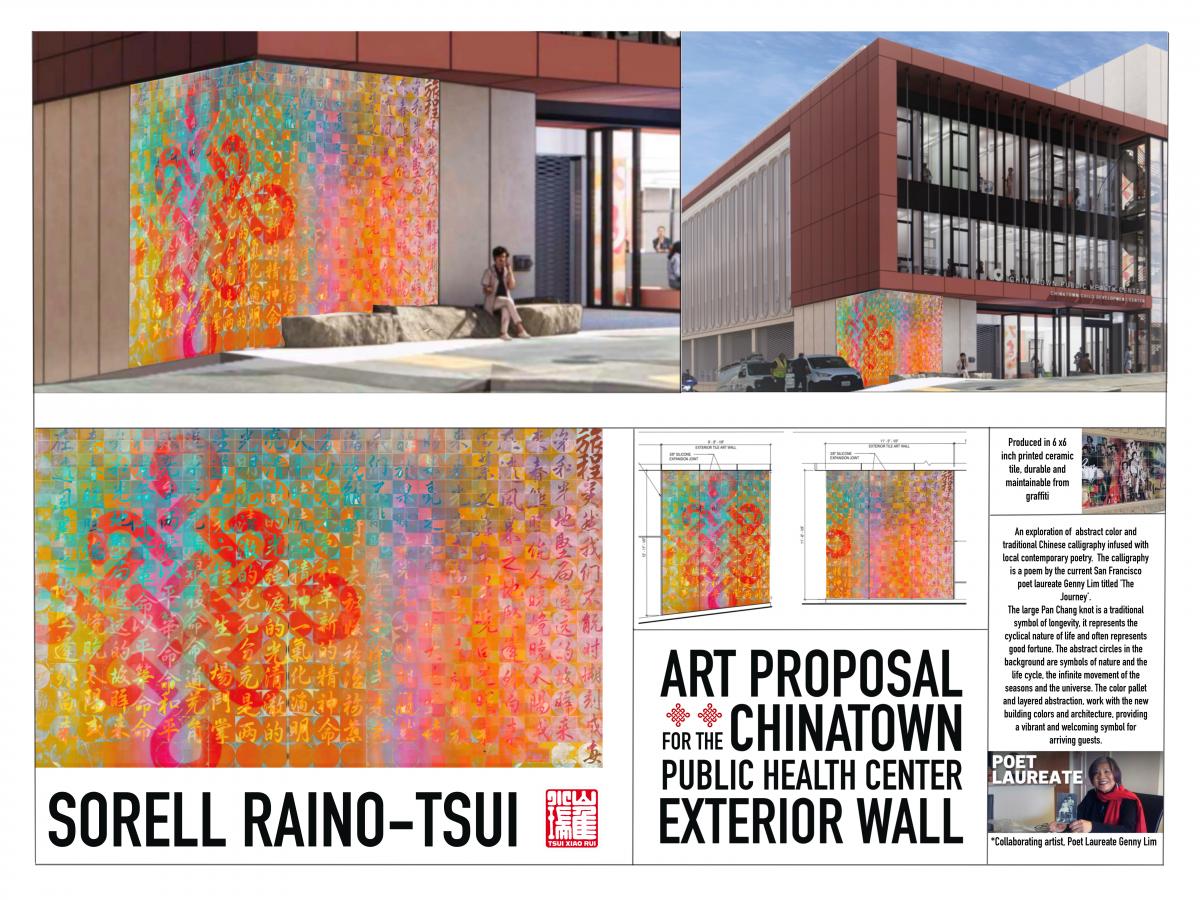
 My art practice brings together traditional Chinese culture and contemporary abstraction to create works that connect the past and present. I use the tools and techniques of Chinese calligraphy — brush, ink, and gesture — not just as writing, but as a form of painting and movement. Each stroke carries the rhythm of language and emotion, expressing meaning through feeling rather than words. My goal is to help viewers experience the spirit of tradition in a new, universal way.
The proposed work, combines abstract calligraphy, poetry, and symbolism to honor the immigrant experience and celebrate cultural connection. The central element is a poem by San Francisco Poet Laureate Genny Lim, who was born and raised in San Francisco to parents from the Toisan region of China. Her poem, titled The Journey, reflects on love, hope, and the challenges faced by those who leave their homeland to build new lives. It speaks to the courage and resilience that define the immigrant story — a theme that continues to shape San Francisco’s identity.
In the artwork, Lim’s poem will appear in Chinese calligraphy, written in collaboration with master calligrapher Karen Tseng. While I often explore calligraphy abstractly in my work, Genny’s poem deserves a faithful rendering by a skilled specialist. Karen’s mastery will ensure that the poem’s written form carries the grace, rhythm, and respect of traditional Chinese script. Both Genny and Karen have reviewed and approved their involvement in this project and are excited to see it realized.
The visual composition centers on a large Pan Chang knot, a traditional Chinese symbol of longevity, continuity, and good fortune. It represents the interconnected cycles of life — the ties that link generations and experiences. Behind the knot, soft circular forms and layers of color symbolize nature, movement, and the infinite flow of time. Together, they create a sense of harmony and renewal. The color palette is designed to complement the building’s architecture, adding vibrancy and warmth to the space while welcoming visitors.
For production, I will partner with Windsor Fire Form, who specialize in high-quality full-color ceramic tile printing. The artwork will be composed of 6 x 6-inch tiles, durable enough to withstand weather, cleaning, and public interaction. This technique ensures long-term preservation of color and detail while maintaining an elegant, permanent finish suitable for outdoor installation.
Ultimately, my goal is to create a work that is beautiful, inclusive, and meaningful. I want viewers to be drawn in by its color and form, to read the poem, and to feel its emotional depth. The Journey is both personal and universal — a story of movement, belonging, and renewal. Through it, I hope to honor the traditions that shaped me and to offer a vibrant symbol of hope and connection for everyone who encounters it.
View a larger image.

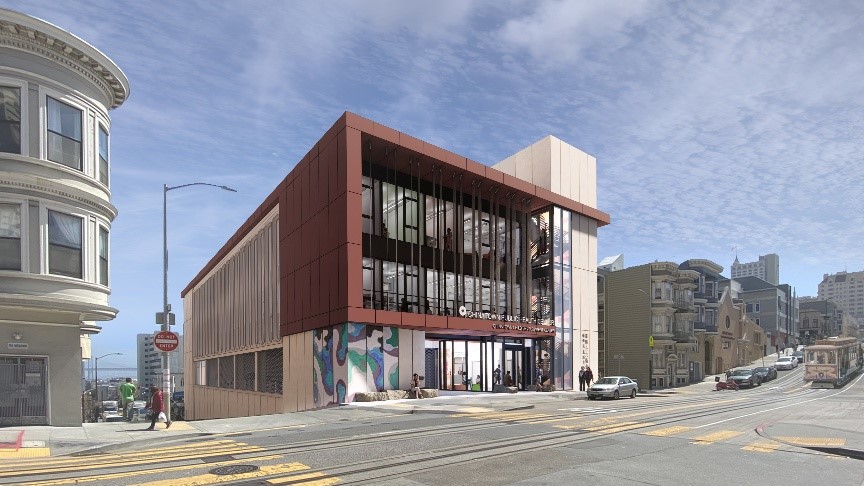 The San Francisco Arts Commission is conducting a review process to select an artist to design an artwork for the exterior wall of the renovated Chinatown Public Health Center (CPHC). The artwork will be installed on the street-level façade at the corner of Mason and Broadway Streets, adjacent to the clinic entrance. The artwork will measure approximately 360 square feet and be composed of digitally printed ceramic tile.
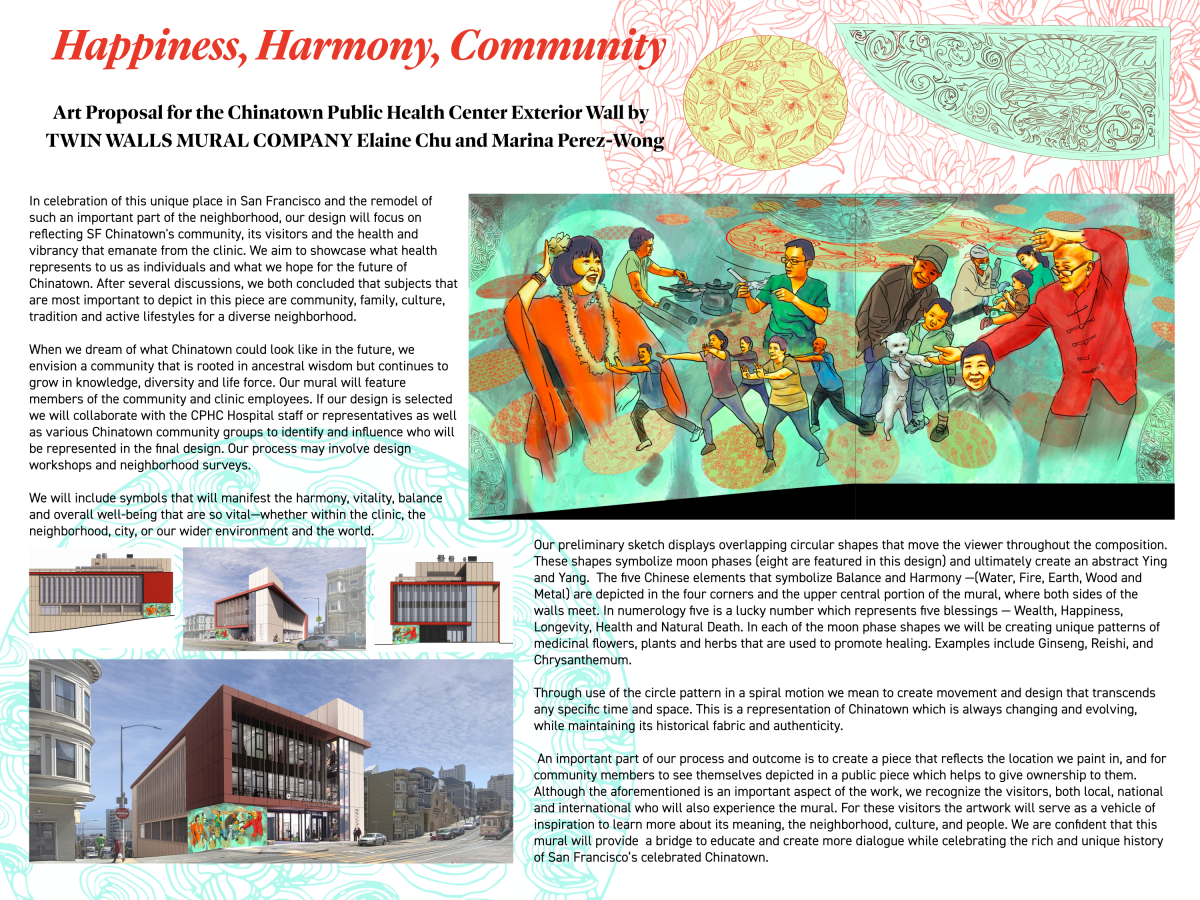 In celebration of this unique place in San Francisco and the remodel of such an important part of the neighborhood, our design will focus on reflecting SF Chinatown's community, its visitors and the health and vibrancy that emanate from the clinic. We aim to showcase what health represents to us as individuals and what we hope for the future of Chinatown. After several discussions, we both concluded that subjects that are most important to depict in this piece are community, family, culture, tradition and active lifestyles for a diverse neighborhood.
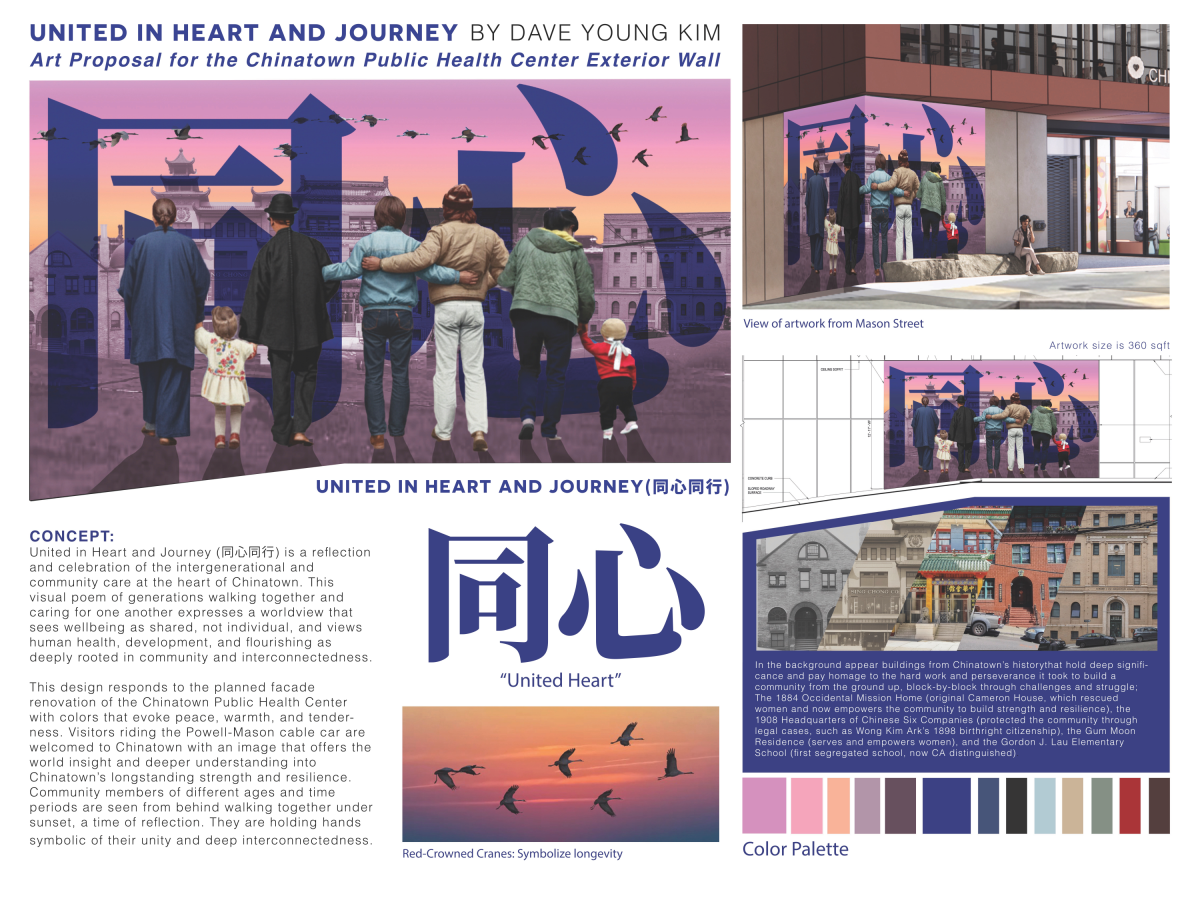 United in Heart and Journey (同心同行) celebrates the intergenerational bonds that define Chinatown’s vibrant community. The mural honors the shared journey of generations, where well-being is rooted in connection, care and mutual support.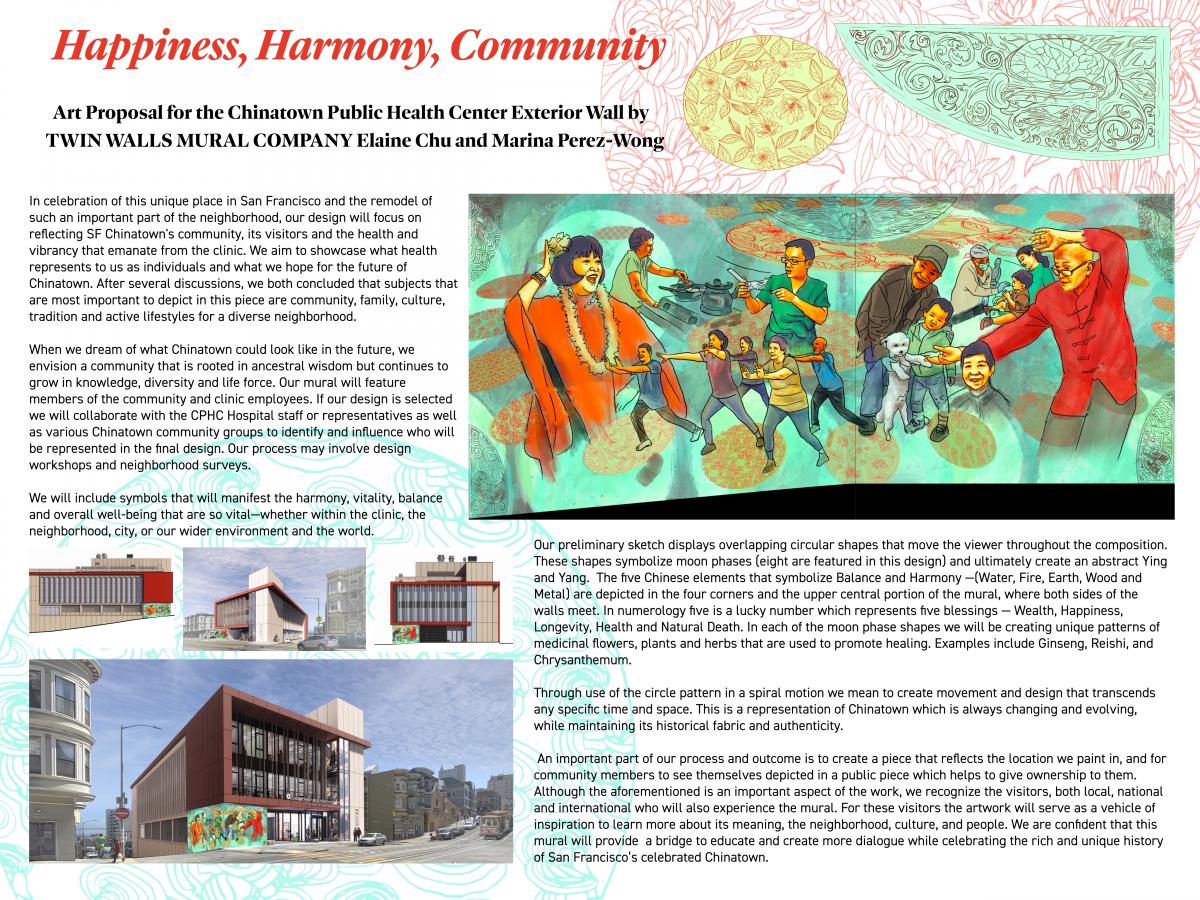
Opportunity For Public Comment
Please take a few minutes to review these artwork proposals and provide feedback. The proposals are available online at www.sfartscommission.org/calendar/proposal-displays, or accessed by the QR Code below, where you can leave feedback in the public comment form. Comments may also be submitted via email to sfacpublicartcomment@sfgov.org by Monday, December 22 at 5:00 p.m. PST.
Public comments will be considered by the Review Panel as part of the Final Review Panel meeting where the Panel will recommend one proposal for implementation. Please note that public comments do not constitute a vote.
The Final Review Panel meeting will take place remotely the week of January 12, 2026. All Artist Review Panel meetings are open to the public. An agenda for the meeting will be posted 72 hours in advance of the meeting on SFAC’s website under the Public Meeting section: www.sfartscommission.org